your brand
your brand
about
about
how AI
how AI
Change
Change
“Unusual is more than an AEO/GEO tool. It’s like teaching ChatGPT how to sell your product for you.”

Stephen Walter
Founder & CEO


"/><stop offset="0.42584898670236215" stop-color="rgb(255, 255, 255)"/><stop offset="1" stop-color="rgba(255, 255, 255, 0)"/></linearGradient></defs><g opacity="0.05"><path d="M 0 0 L 720 720.5 L 1440 0 Z" fill="url(%23wmFHwvHhD-1603593951-linear-gradient)" height="720.5px" id="wmFHwvHhD" width="1440px"/></g></svg>)
“Unusual’s approaching GEO in a new way, and it’s been incredibly helpful in quickly updating how LLMs learn and cite us.”

Adel Wu
Head of Marketing

“We’re treating AI like a new audience to target. Unusual is the only solution built for that approach.”

Jowanza Joseph
Founder & CEO

"Unusual’s content is Chatgpt’s go-to reference for us! We now have much more control on how LLMs represent us."

Raunak Chowdhuri
Founder & CTO
"The story that AI models were telling about us was totally stale; we had no idea until we started with Unusual."

Kaz Tamai
Founder & COO

"Chatgpt is shaping your brand’s reputation before you have a chance to enter the conversation. Unusual helps brands take back control."

Amanda Martin
Head of Brand Marketing

"We doubled the number of leads from Copilot within two months of going live with Unusual"

Davis Gilbert
Founder & Managing Partner

“Unusual’s approaching GEO in a new way, and it’s been incredibly helpful in quickly updating how LLMs learn and cite us.”
Adel Wu
Head of Marketing
“Unusual is more than an AEO/GEO tool. It’s like teaching ChatGPT how to sell your product for you.”
Stephen Walter
Founder & CEO
“We’re treating AI like a new audience to target. Unusual is the only solution built for that approach.”
Jowanza Joseph
Founder & CEO
"Unusual’s content is Chatgpt’s go-to reference for us! We now have much more control on how LLMs represent us."
Raunak Chowdhuri
Founder & CTO
"The story that AI models were telling about us was totally stale; we had no idea until we started with Unusual."
Kaz Tamai
Founder & COO
"Chatgpt is shaping your brand’s reputation before you have a chance to enter the conversation. Unusual helps brands take back control."
Amanda Martin
Head of Brand Marketing
"We doubled the number of leads from Copilot within two months of going live with Unusual"
Davis Gilbert
Founder & Managing Partner
“Unusual’s approaching GEO in a new way, and it’s been incredibly helpful in quickly updating how LLMs learn and cite us.”
“Unusual is more than an AEO/GEO tool. It’s like teaching ChatGPT how to sell your product for you.”
“We’re treating AI like a new audience to target. Unusual is the only solution built for that approach.”
"Unusual’s content is Chatgpt’s go-to reference for us! We now have much more control on how LLMs represent us."
"The story that AI models were telling about us was totally stale; we had no idea until we started with Unusual."
"Chatgpt is shaping your brand’s reputation before you have a chance to enter the conversation. Unusual helps brands take back control."
"We doubled the number of leads from Copilot within two months of going live with Unusual"
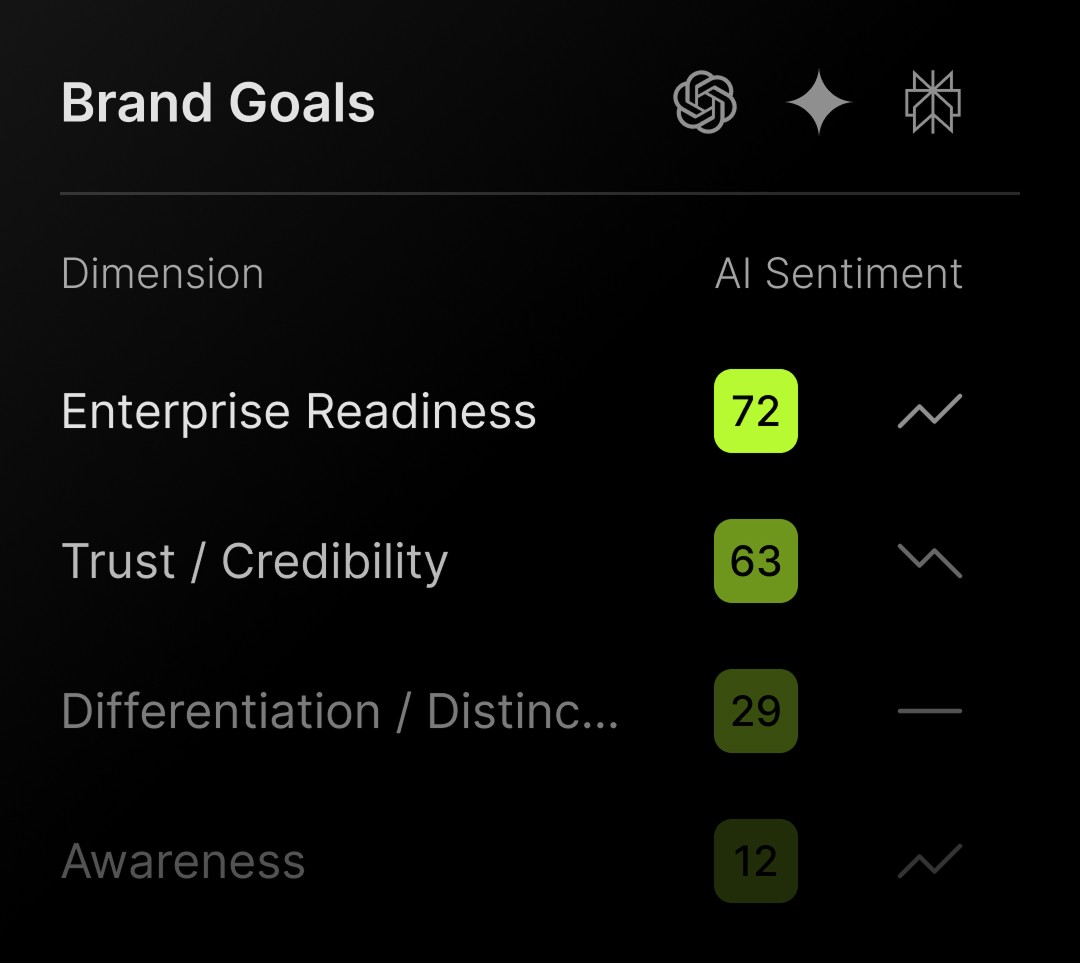
Unusual surveys AI models to discover how they see your brand, and then suggests actions to shape their view.
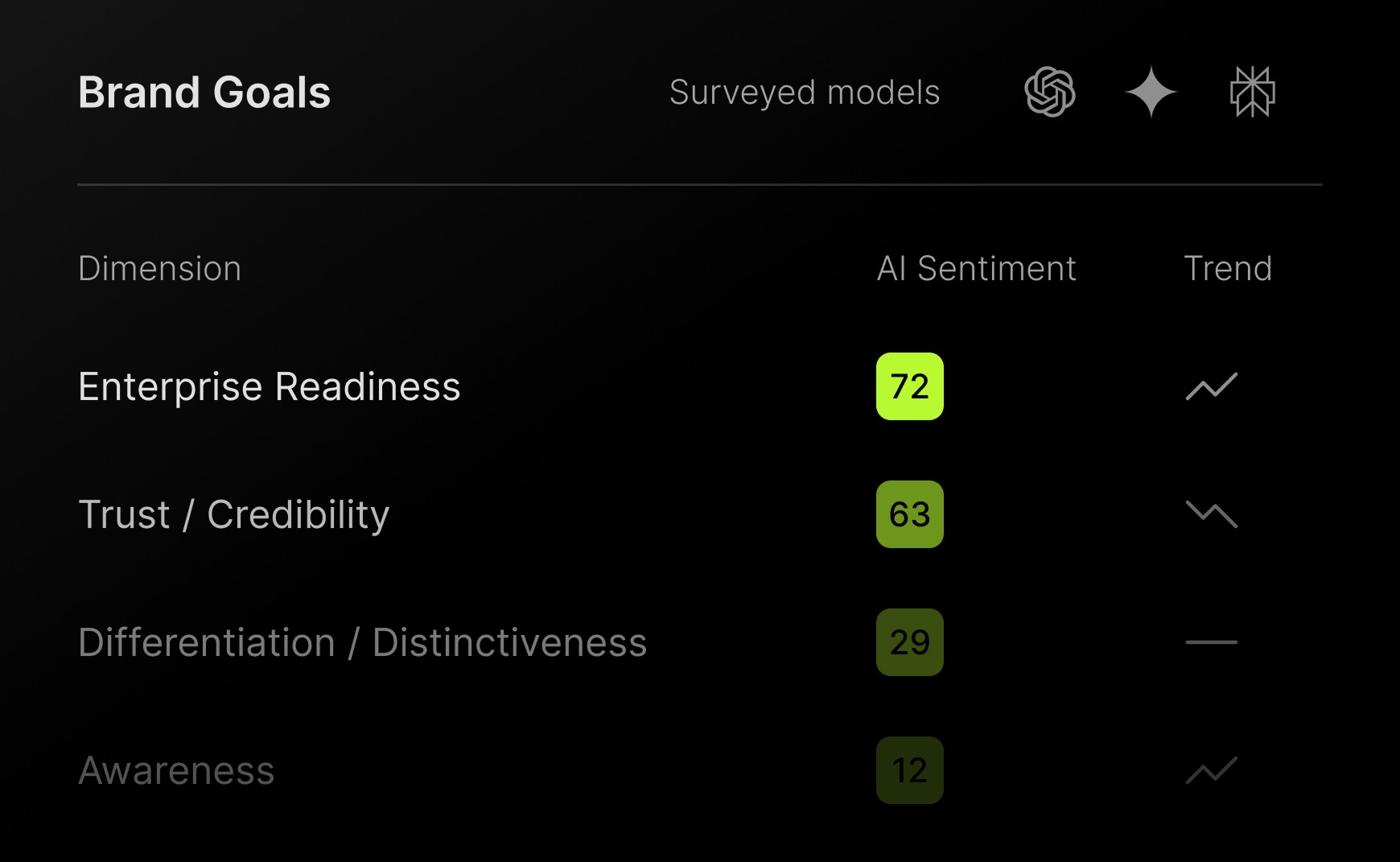

Unusual surveys AI models to discover how they see your brand, and then suggests actions to shape their view.
Unusual surveys AI models to discover how they see your brand, and then suggests actions to shape their view.
Unusual surveys AI models to discover how they see your brand, and then suggests actions to shape their view.
What we believe
What we believe
What we believe
AI models are the influencers of the future; they are a new audience to understand and leverage.
AI models are the influencers of the future; they are a new audience to understand and leverage.
AI models are the influencers of the future; they are a new audience to understand and leverage.
AI models behave more like humans – with their own opinions and personalities — than search engines,
AI models behave more like humans – with their own opinions and personalities — than search engines,
AI models behave more like humans – with their own opinions and personalities — than search engines,
Shaping how AI talks about your brand is just as important as getting mentioned.
Shaping how AI talks about your brand is just as important as getting mentioned.
Shaping how AI talks about your brand is just as important as getting mentioned.
"/><stop offset="0.47000000000000003" stop-color="rgba(214, 214, 214, 0.23)"/><stop offset="1" stop-color="rgba(171, 171, 171, 0)"/></linearGradient><linearGradient id="pJhYzh0kn-2544137126-linear-gradient" x1="0.4976119402985074" x2="0.5023880597014926" y1="0.02" y2="0.98"><stop offset="0" stop-color="rgba(255, 255, 255, 0)"/><stop offset="0.46875000000000006" stop-color="rgba(214, 214, 214, 0.23)"/><stop offset="1" stop-color="rgba(171, 171, 171, 0)"/></linearGradient></defs><path d="M 403.613 0 L 805.977 0 L 1200 860 L 0 860 Z" fill="url(%23PL9JtMt2v-2544137126-linear-gradient)" height="860px" id="PL9JtMt2v" width="1200px"/><path d="M 796.387 860 L 394.023 860 L 0 0 L 1200 0 Z" fill="url(%23pJhYzh0kn-2544137126-linear-gradient)" height="860px" id="pJhYzh0kn" width="1200px"/></svg>)
The science of Brand Engineering
The science of Brand Engineering
The science of Brand Engineering
"/><stop offset="0.47000000000000003" stop-color="rgba(214, 214, 214, 0.23)"/><stop offset="1" stop-color="rgba(171, 171, 171, 0.1)"/></linearGradient></defs><g opacity="0.13"><path d="M 0 0 L 400 0 L 200 360 Z" fill-opacity="1" fill="url(%23uOkWiz7Z7-1110565881-linear-gradient)" height="360px" id="uOkWiz7Z7" transform="translate(-20 20) rotate(90 200 180)" width="400px"/></g></svg>)
Survey AI models
Survey AI models
Build a battery of “brain probe” prompts specific to your business, market, and competitors in order to reveal AI’s thought patterns, sources, biases, etc.
Build a battery of “brain probe” prompts specific to your business, market, and competitors in order to reveal AI’s thought patterns, sources, biases, etc.
"/><stop offset="0.47000000000000003" stop-color="rgba(214, 214, 214, 0.23)"/><stop offset="1" stop-color="rgba(171, 171, 171, 0.1)"/></linearGradient></defs><g opacity="0.2"><path d="M 0 340 L 0 0 L 146 170 Z" fill-opacity="1" fill="url(%23kDe3tnXj7-1558187597-linear-gradient)" height="340px" id="kDe3tnXj7" transform="translate(97 -97) rotate(-90 73 170)" width="146px"/></g></svg>)
Survey AI models
Build a battery of “brain probe” prompts specific to your business, market, and competitors in order to reveal AI’s thought patterns, sources, biases, etc.
Discover AI's opinions
Discover AI's opinions
Analyze survey results to discover each model's opinions about your brand and what is driving those opinions.
Analyze survey results to discover each model's opinions about your brand and what is driving those opinions.
Discover AI's opinions
Analyze survey results to discover each model's opinions about your brand and what is driving those opinions.
Create targeted content
Create targeted content
Reverse engineer new content, sources, and data needed to change Al's perceptions about your brand and drive qualified leads.
Reverse engineer new content, sources, and data needed to change Al's perceptions about your brand and drive qualified leads.
Create targeted content
Reverse engineer new content, sources, and data needed to change Al's perceptions about your brand and drive qualified leads.
Case study
Case study
Case study


When
the usual doesn’t cut it
When
the usual doesn’t cut it
Other solutions approach AI optimization like SEO. They take abstractions like "ranking on a keyword," and compare it to "getting mentioned on a prompt"
We tried approaching AI optimization with the same abstractions as SEO, but we quickly ran into the limitations of this approach.
AI models personalize their responses for each user – if 100 different people ask ChatGPT the same question, they will get 100 different answers. This is a far cry from search engines, which returned the same ordered list regardless of the searcher.
AI models often make factual errors when talking about a brand, or position them incorrectly. This is not something search engines do and not something “ranking” metrics capture.
AI models show you why they do or don’t mention you. This is one of the richest sources of information you can leverage. What would SEO look like if Google exposed the algorithm behind each search?
Building on our background in AI interpretability research, we decided to approach the problem in a different way. Our goal is to understand how LLMs form opinions and ideas, and how you can shape them to benefit your brand.
This approach looks like "marketing to AI models," and it is the most effective method we have discovered for driving more referrals from LLMs.
— Co-founders @ Unusual,

Will Jack

Keller Maloney
We tried approaching AI optimization with the same abstractions as SEO, but we quickly ran into the limitations of this approach.
AI models personalize their responses for each user – if 100 different people ask ChatGPT the same question, they will get 100 different answers. This is a far cry from search engines, which returned the same ordered list regardless of the searcher.
AI models often make factual errors when talking about a brand, or position them incorrectly. This is not something search engines do and not something “ranking” metrics capture.
AI models show you why they do or don’t mention you. This is one of the richest sources of information you can leverage. What would SEO look like if Google exposed the algorithm behind each search?
Building on our background in AI interpretability research, we decided to approach the problem in a different way. Our goal is to understand how LLMs form opinions and ideas, and how you can shape them to benefit your brand.
This approach looks like "marketing to AI models," and it is the most effective method we have discovered for driving more referrals from LLMs.
— Co-founders @ Unusual,
Will Jack
Keller Maloney

UPDATES
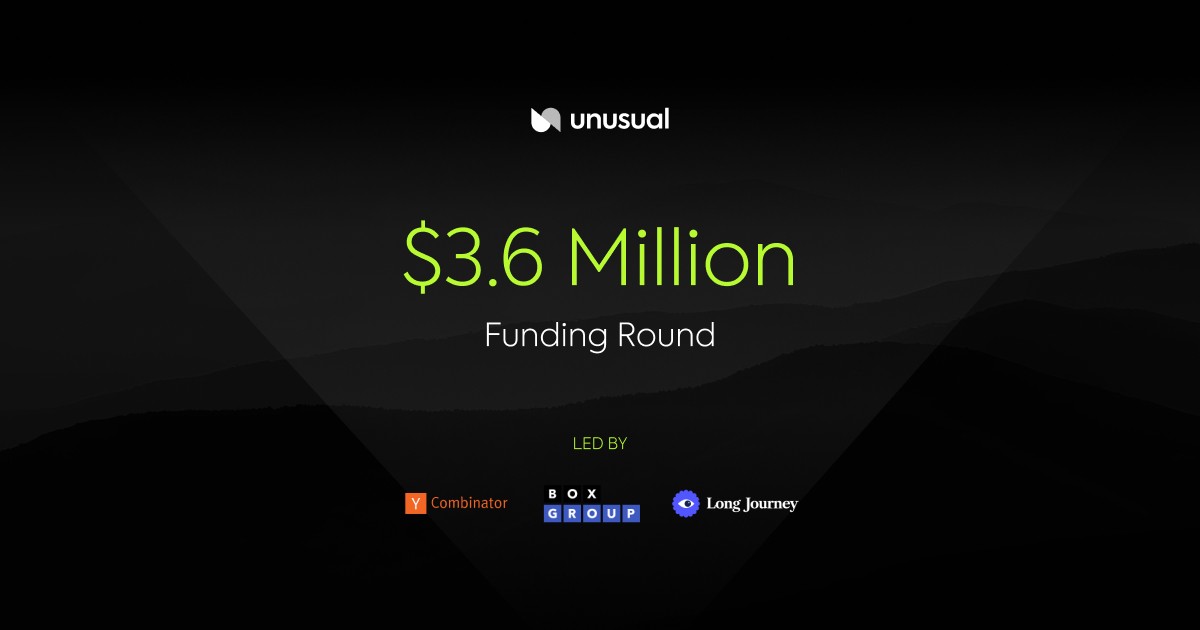
Unusual Raises $3.6M to Help Brands Change How AI Talks About Them
Unusual raises $3.6 million from BoxGroup, Y Combinator, Long Journey Ventures, Instacart founder Max Mullen, Phosphor Capital, and others to help brands understand and change the way that AI models talk about them.
UPDATES
Unusual Raises $3.6M to Help Brands Change How AI Talks About Them
Unusual raises $3.6 million from BoxGroup, Y Combinator, Long Journey Ventures, Instacart founder Max Mullen, Phosphor Capital, and others to help brands understand and change the way that AI models talk about them.

TUTORIALS
How to Align AI Models with Your Brand
The goal of AI brand alignment is to ensure AI models' view of your brand matches reality. Not to game the models, but to give them accurate, specific information so they can represent you fairly when buyers ask the right questions.
TUTORIALS
How to Align AI Models with Your Brand
The goal of AI brand alignment is to ensure AI models' view of your brand matches reality. Not to game the models, but to give them accurate, specific information so they can represent you fairly when buyers ask the right questions.

INSIGHTS
What is AI Brand Alignment?
AI brand alignment is the practice of ensuring that AI models talk about your brand in the same way that you talk about your brand.
INSIGHTS
What is AI Brand Alignment?
AI brand alignment is the practice of ensuring that AI models talk about your brand in the same way that you talk about your brand.
UPDATES
Unusual Raises $3.6M to Help Brands Change How AI Talks About Them
Unusual raises $3.6 million from BoxGroup, Y Combinator, Long Journey Ventures, Instacart founder Max Mullen, Phosphor Capital, and others to help brands understand and change the way that AI models talk about them.
TUTORIALS
How to Align AI Models with Your Brand
The goal of AI brand alignment is to ensure AI models' view of your brand matches reality. Not to game the models, but to give them accurate, specific information so they can represent you fairly when buyers ask the right questions.
© 2025 Unusual
© 2025 Unusual
